Building Life Skills to Prevent and Treat Drug Addiction
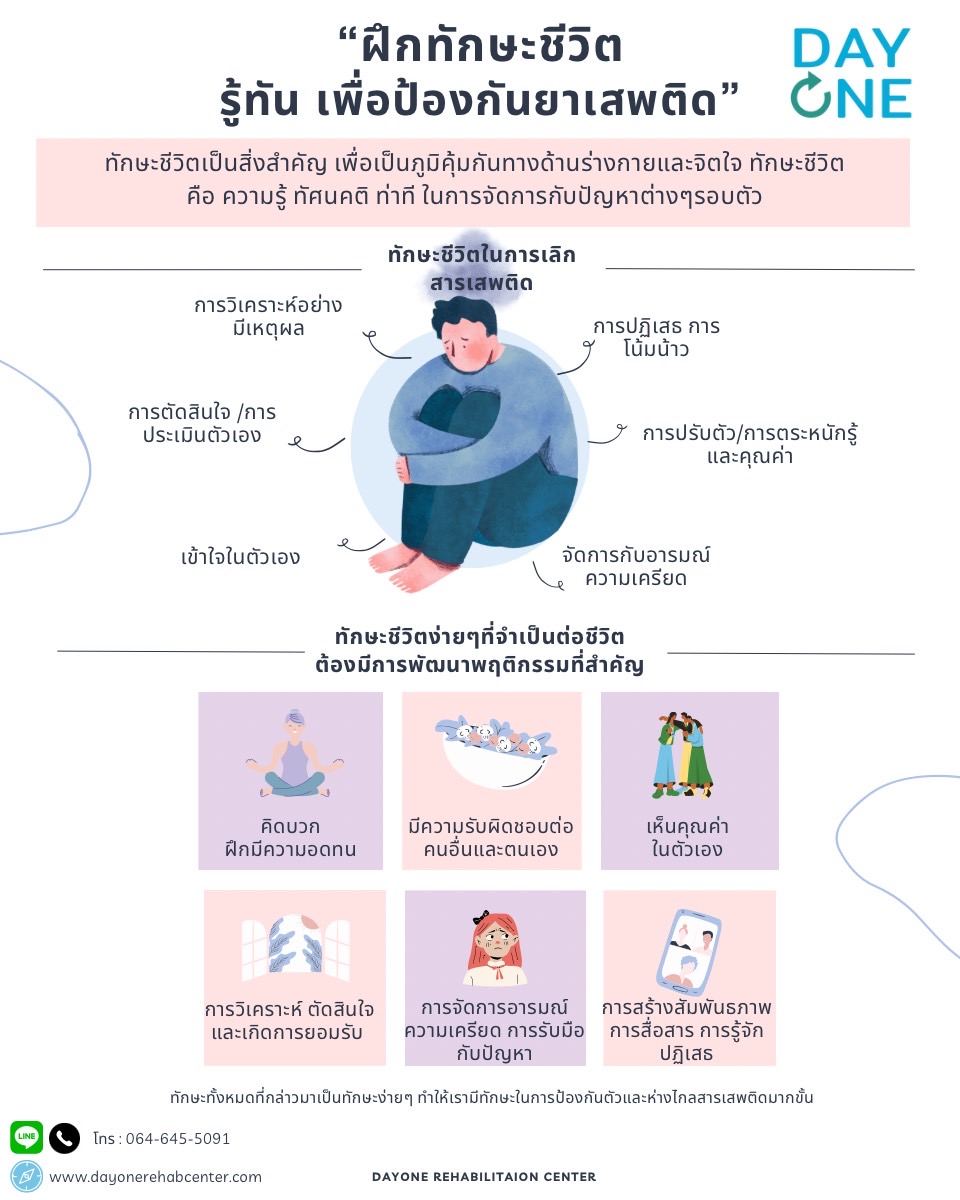
Building life skills is important and necessary for everyone, children and adults alike, as a strong way to build resilience for both body and mind — making it easier for us to face all kinds of problems, such as adjusting certain behaviors to develop skills for coping with problems and the surrounding environment. First, let’s get to know what “life skills” means. The term refers to the knowledge, attitudes, and outlook that make up a person’s ability to manage the challenges around them in today’s society, and to prepare for the future — whether related to sexuality, drugs, family life, health, the environment, or other social issues.
The World Health Organization (WHO) Divides Life Skills into Three Learned Behavioral Areas
Cognitive skills include: critical thinking, the ability to evaluate information and problems around oneself, creativity, and the capacity for broad, open-minded thinking that isn’t confined to a fixed framework.
Emotional qualities include:
- Self-awareness: the ability to understand one’s own strengths, weaknesses, and how one differs from others
- Empathy: the ability to understand and share the feelings of people different from oneself
- Self-esteem: a sense of one’s own worth, discovering and taking pride in one’s own abilities
- Social responsibility: a sense of being part of society and sharing responsibility within it
Skill areas include:
- Relationship-building and communication skills: the ability to use words and body language to communicate one’s own feelings and thoughts and understand those of others — whether expressing appreciation, declining something, or otherwise
- Decision-making and problem-solving skills: the ability to recognize a problem and its causes, identify options, weigh their pros and cons, evaluate the problem, and make an appropriate decision and take suitable action
- Emotional and stress management skills: the ability to assess one’s emotions, stay aware of one’s own feelings and behavior, choose appropriate ways to manage emotions, learn to control stress, know how to relax, and avoid inappropriate behavior
These basic life skills can be applied specifically to preventing drug use, building effective personal and social skills to handle situations involving drugs — such as reasoned analytical thinking, decision-making, self-assessment, communication, and negotiation skills.
Refusal Skills, Persuasion Skills, and Adaptability — the Essential Skills, Simply Explained
1. Self-awareness and valuing yourself and others. Building a sense of one’s own worth is one of the key factors in preventing drug misuse. Some people lack this awareness or fail to see their own value, which can weaken their relationships and their ability to care for others, leading to social isolation and a range of problems — increasing the likelihood of drug use and, in serious cases, suicide risk. Because of this, it’s important to develop the following key behaviors:
- Thinking positively
- Practicing patience with yourself
- Avoiding risky situations (conflict, drugs)
- Behaving in ways that benefit yourself and others
- Having a sense of humor
- Taking responsibility toward others
- Loving and valuing yourself and others
- Taking pride in yourself and others
- Having confidence in yourself and others
- Taking responsibility toward society
2. Analytical thinking, decision-making, and creative problem-solving. Facing situations that require a decision — whether to accept or decline an offer — requires awareness of the consequences of that choice. This means practicing decision-making: studying and analyzing the information relevant to the decision or problem, then weighing the options carefully before choosing the best path.
3. Managing emotions and stress. The ability to manage stress, anger, conflict, and time is an essential skill for facing problems. Someone who cannot manage social pressure — whether from themselves or from their peer group — is more likely to turn to drug use.
4. Building good relationships with others. Communication is at the heart of building relationships between people, both verbal and non-verbal. Developing communication skills — such as being able to say no to a friend who might invite you to use drugs, or warning a friend showing risky behavior to avoid or change course — helps build confidence and strength, the courage to refuse, and the readiness to build relationships with others who don’t use substances, along with the ability to manage risky situations.
All of the above are simple skills that can be practiced from childhood through adulthood, giving us the life skills to protect ourselves and helping us stay further away from drugs. Day One is a drug treatment center that rehabilitates people struggling with drugs and alcohol. Our multidisciplinary team of specialists organizes therapeutic activities and various drug treatment programs that benefit the body, emotions, and mind of each person in treatment — both individual and group activities that build a range of skills, including social skills, so people in treatment can learn to live alongside others and find a new balance in life, here at Day One Rehabilitation Center.
For more information, contact us at 99/1 Moo 6, Si Chula, Mueang Nakhon Nayok, Nakhon Nayok 26000, Thailand +66 64-645-5091 Mon – Sun: 9:00 AM – 5:00 PM (ICT)