
The Addicted Brain: How Does Addiction Change the Brain?
How the Brain’s Function Becomes Distorted in People with Addiction
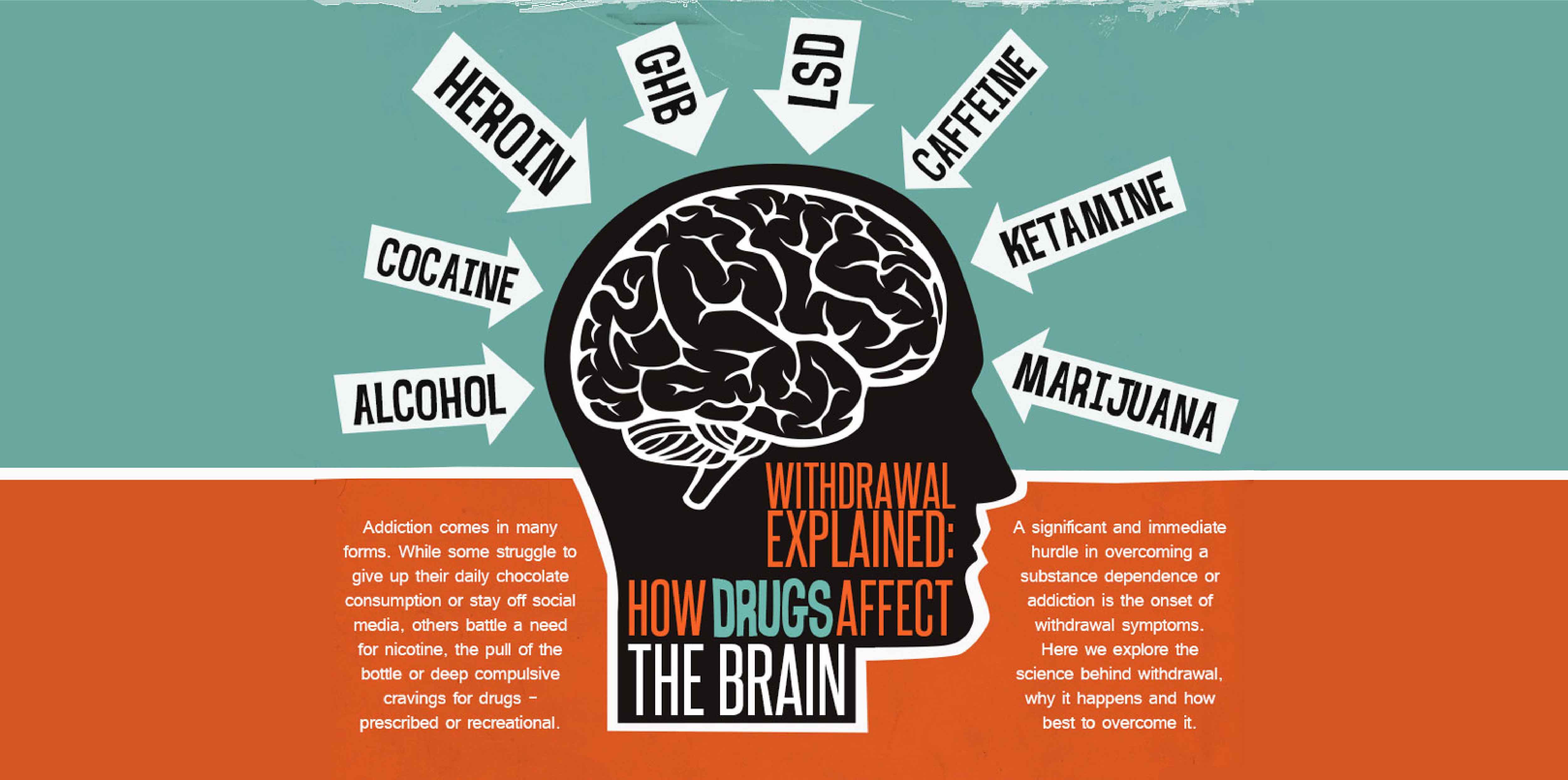
The brain has two main parts: the thinking brain, which is responsible for rational thought and decision-making, and the “wanting” brain, which serves as the control center for emotion and behavior. Drugs stimulate nerve endings in the brain to release large amounts of brain chemicals. These chemicals stimulate the brain’s pleasure center, producing feelings of euphoria. With repeated drug use, the way the brain works changes: rational thinking is lost, and the “wanting” brain takes control instead. People who use drugs therefore often display inappropriate behavior — aggression, irritability, and an inability to control themselves — which leads to more frequent use. As drug use becomes more frequent, drugs destroy some brain cells and reduce the brain’s supply of chemical messengers, weakening the capacity for thinking and memory, and eventually causing psychiatric symptoms and psychosis.
How to Recover from an Addicted Brain: There Is Only One Way — “Stop Using Drugs Immediately”
The brain has the chance to recover once drug use stops, as long as it has not been permanently damaged. Stopping drug use brings on withdrawal symptoms and cravings, which is why people with addiction often return to using again. This is why the people closest to them need to step in, help, and guide them into addiction treatment, so they can quit for good.
Addiction treatment built on a psychosocial model teaches techniques that help people in recovery reshape their thoughts, emotions, and behavior, so they can live without depending on drugs, permanently.
The Conditioned Behavior That Triggers Cravings
In a famous experiment, scientists fed a dog while ringing a bell at the same time. Seeing and smelling the food stimulated the dog’s “wanting” brain (its autonomic nervous system) to release saliva and stomach digestive juices in preparation for eating. After repeating this for a while, the scientists then rang the bell without giving any food — and the dog still salivated and released digestive juices, just as it did when it was actually fed. The dog had linked the sound of the bell, the trigger, with the expectation of receiving food.
The brain of a person with addiction works the same way. It responds to conditioned triggers that produce cravings. Using drugs changes the brain by creating pleasure while under their effect, and the brain records everything present in that moment. Over time, the brain responds to those same things as though drugs are about to be used again — we call these things “triggers.” When a person with addiction encounters a trigger, it produces a craving. In the scientists’ experiment, the only way the dog could avoid salivating at the sound of the bell was to get away from it entirely. It is the same for people with addiction: to avoid cravings, they need to avoid every kind of trigger.
CT Scan Images of the Brain in Different Types of Addiction
Ref: U.S. National Institute on Drug Abuse (NIDA)
Drugs act directly on the brain. Methamphetamine (yaba) in particular stimulates the central nervous system. After continuous use for a period of time, the brain’s chemical messengers change and abnormalities develop in brain cells. These changes cause emotional and behavioral abnormalities in the user, and worsen both memory and thinking ability. As drug use increases further, users begin to develop psychiatric symptoms, including hearing voices or feeling as though insects are crawling on the skin. If the person does not stop using, this can eventually lead to psychosis.
CT scan images (PET scans) of the brain at different stages clearly show that pathological changes occur at each stage, from early use through to full addiction. These pathological changes disappear if the person with addiction receives proper treatment.
Ref: U.S. National Institute on Drug Abuse (NIDA)
Three-dimensional CT images showing the outer surface of the brain (the cerebral cortex), comparing a normal brain with the brain of a person in early-stage addiction and the brain of a person in late-stage addiction.
The rough, uneven brain surface seen in both early- and late-stage addiction reflects reduced brain cell activity, caused directly by the effect of drugs on brain cells. The longer the addiction continues, the more brain function declines.
This decline in outer brain function reduces the capacity for memory, thinking, decision-making, and calculation. In the early stages, the person with addiction is usually not very aware of these changes — cognitive testing is needed to detect them. Only once addiction has progressed for some time do the person with addiction and those close to them begin to notice these various brain abnormalities.
Brain pathology decreases once a person with addiction stops using drugs. The brain tries to repair itself by building new networks of brain cells, but this repair takes a fairly long time, or requires effective treatment.
Deeply Embedded Memories and Drug Cravings
People with addiction often carry deeply embedded memories related to drugs, which is one of the biggest obstacles to quitting. One study offers strong evidence of this: researchers showed two types of videos to people who were in the process of quitting cocaine, using Positron Emission Tomography (PET) scans to measure brain activity. The results showed that videos of triggering images, such as drug paraphernalia, activated the amygdala — the part of the brain involved in memory and emotion — at the same time that patients reported cravings. Videos of natural scenery did not activate this part of the brain and did not produce cravings. The same pattern appears in people who have already quit: their amygdala shows altered activity that can still be easily triggered, which is why people who are trying to quit remain sensitive and prone to relapse.
There is no easy way to quit drugs, and people cannot do it entirely on their own — those with addiction need help from doctors to get through it. If you or someone in your family has lost their way and wants to quit drugs, or your family is searching for treatment, consult Day One Rehabilitation Center, an addiction treatment center in Nakhon Nayok province with a resort-like atmosphere, surrounded by water and nature, calm and relaxing — a rehabilitation center for people struggling with substance use, whether looking for how to quit drugs, how to quit alcohol, or how to stop gambling, supported by a team of specialist doctors, psychiatrists, psychiatric nurses, psychologists, and occupational therapists with expertise in substance use problems, ready to give guidance and consultation.
Contact Us
99/1 Moo 6, Si Chula, Mueang Nakhon Nayok, Nakhon Nayok 26000, Thailand
+66 64-645-5091
[email protected]
Mon – Sun: 9:00 AM – 5:00 PM (ICT)