Ayahuasca: The "Mind-Opening" Substance That Can Still Become Addictive
Ayahuasca Is a Psychoactive Substance
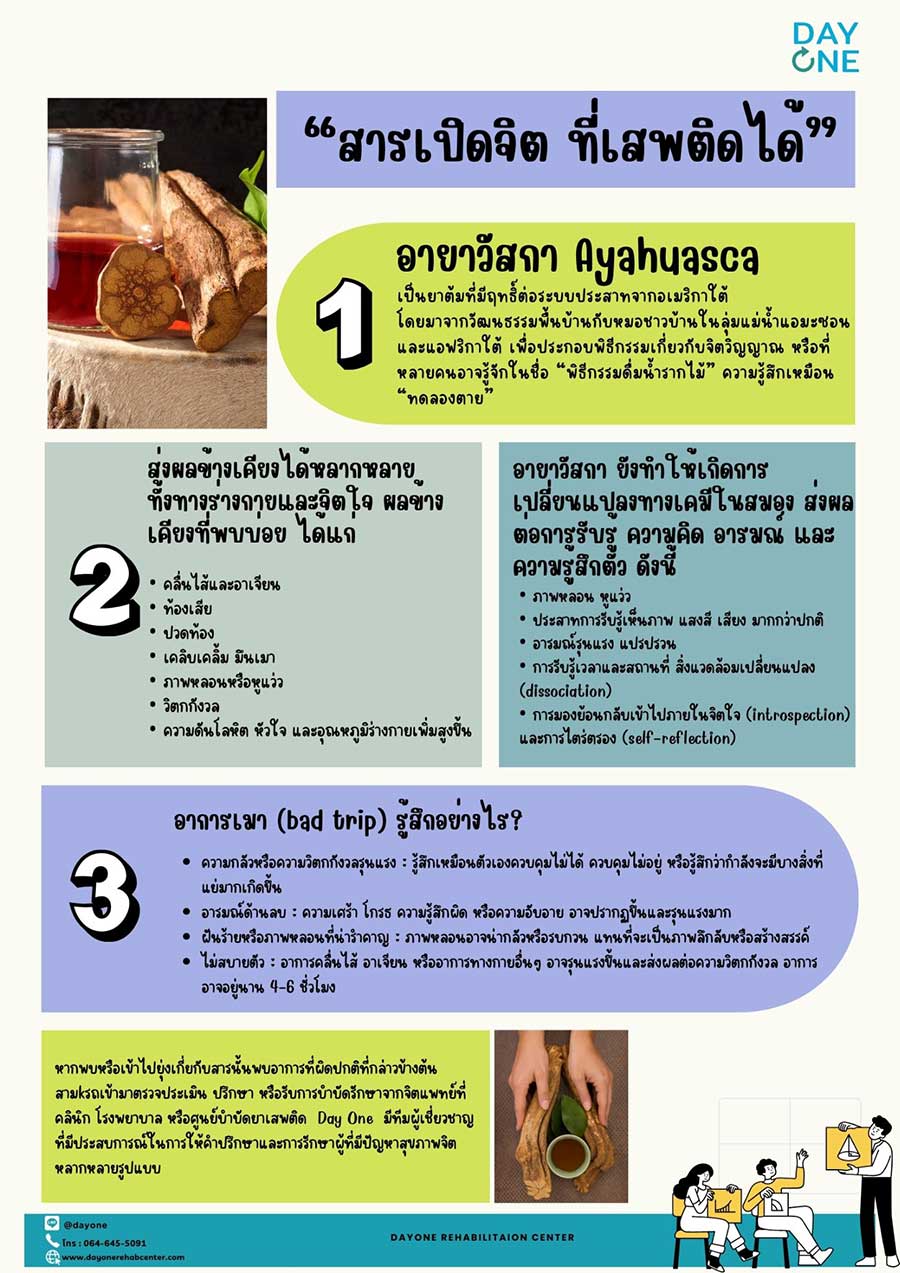
Ayahuasca is a psychoactive brew originating in South America, rooted in the folk traditions of shamans along the Amazon River basin as well as in parts of Africa, used in spiritual ceremonies. Many people know it as the “root water ceremony,” often described as feeling like a kind of “trial death” — a ritual involving drinking an herbal brew extracted from a root native to the region. In recent years, this substance has become more widely known and is now used recreationally around the world, including in Thailand. Users are often drawn to ayahuasca because it produces a heightened sense of emotional depth and self-connection, sometimes described as an “empathogenic” effect. Some describe the experience as bringing back vivid memories of past events, or feeling as though their consciousness has slipped into another dimension.
Ayahuasca’s effects come from several chemical compounds working together. The two key active compounds are:
- N,N-Dimethyltryptamine (DMT): This is the primary psychoactive compound responsible for the hallucinations and altered states of consciousness experienced after drinking ayahuasca. DMT crosses easily into the brain, but under normal circumstances it is quickly broken down by an enzyme called monoamine oxidase A (MAO-A) in the gut and liver. DMT itself is a hallucinogen with addictive potential similar to ketamine, psilocybin (“magic”) mushrooms, and LSD.
- Beta-carboline alkaloids (mainly harmine): These alkaloids inhibit the MAO-A enzyme, preventing DMT from being broken down in the gut and allowing it to enter the bloodstream and reach the brain. Some research also suggests these compounds may enhance DMT’s effects by acting on other neurotransmitter systems.
Ayahuasca is a psychoactive brew that can produce a wide range of side effects, both physical and psychological. Common side effects include:
- Nausea and vomiting
- Diarrhea
- Abdominal pain
- Euphoria and intoxication
- Hallucinations or auditory hallucinations
- Anxiety
- Elevated blood pressure, heart rate, and body temperature
Less common negative side effects include:
- Muscle aches
- Difficulty breathing
- Chest pain
- Joint stiffness or swelling
- Coughing and wheezing
- Fainting
- Seizures
These side effects can vary from person to person, depending on the amount of ayahuasca consumed.
Ayahuasca also produces chemical changes in the brain that affect perception, thought, emotion, and consciousness, including:
- Hallucinations and auditory hallucinations
- Heightened sensory perception — more vivid sights, colors, and sounds
- Intense, unstable emotions
- Altered perception of time, place, and surroundings (dissociation)
- Deep introspection and self-reflection
What Does a “Bad Trip” Feel Like?
- Intense fear or anxiety: A feeling of losing control, being unable to regain control, or sensing that something terrible is about to happen
- Negative emotions: Sadness, anger, guilt, or shame can surface and become overwhelming
- Disturbing nightmares or hallucinations: Hallucinations may become frightening or distressing rather than mysterious or creative
- Physical discomfort: Nausea, vomiting, or other physical symptoms can intensify and add to the anxiety. Episodes can last 4-6 hours.
How to Cope With a Bad Trip
- Focus on your breathing: Deep breathing exercises can help calm the nervous system and regain a sense of control
- Change your environment: If possible, moving to a different setting with calming sights or sounds can help shift the experience
If you or someone you know has been exposed to DMT and is experiencing any of the symptoms described above, you can seek assessment, consultation, or treatment from a psychiatrist at a clinic, hospital, or at Day One Rehabilitation Center. Our experienced team of specialists provides counseling and treatment for a wide range of mental health conditions, including counseling, psychiatric treatment, substance use treatment, and medication, tailored to the severity of each person’s condition and their individual needs.
For more information, please contact us at:
99/1 Moo 6, Si Chula, Mueang Nakhon Nayok, Nakhon Nayok 26000, Thailand
+66 64-645-5091 [email protected]
Mon – Sun: 9:00 AM – 5:00 PM (ICT)