
Laughing Gas: The Danger Behind a Fleeting High
What Is Laughing Gas, and How Does It Harm the Body and Mind?
What is laughing gas? The name sounds like something that makes people happy — fun to use, since it’s called “laughing gas.” But in reality, it might leave you with nothing to laugh about. Let’s take a closer look at what laughing gas actually is.
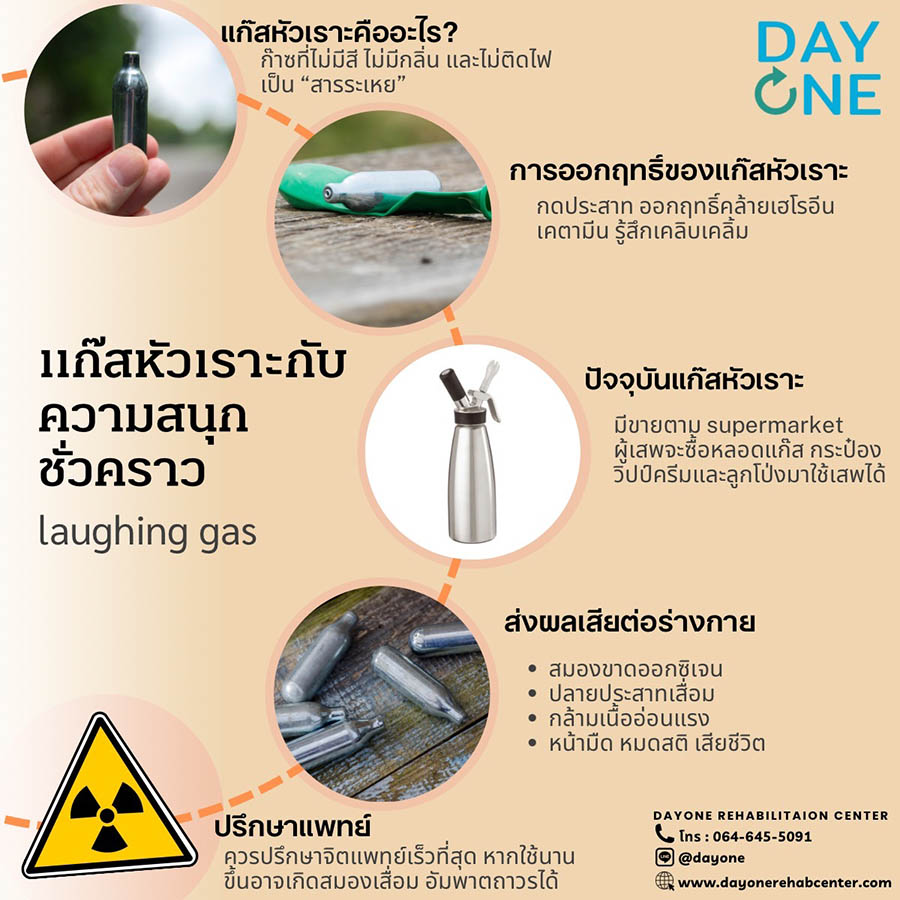
Laughing gas, also known as nitrous oxide, is a colorless, odorless, non-flammable gas classified as an inhalant that depresses the central nervous system.
When inhaled, it causes intense, uncontrollable laughter. This happens because the gas slows down brain activity, along with the respiratory and cardiac systems. Laughing gas is typically used as an anesthetic in medicine, but it’s also used recreationally.
Today, laughing gas is also used in the food and beverage industry as a propellant gas in whipped cream canisters, giving whipped cream its light, fluffy texture. It’s also used in the automotive industry as the gas that inflates airbags.
People who use laughing gas recreationally typically use a small gas tank or a whipped cream canister to fill a balloon, then inhale the nitrous oxide from the balloon. If you come across balloon fragments, whipped cream canisters, or empty tanks, it may be a sign that someone has been using nitrous oxide.
How Laughing Gas Affects the Body
Laughing gas acts on GABA-A receptors, producing relaxation and reduced anxiety. It also raises dopamine levels in the brain, which are linked to feelings of pleasure and enjoyment. Within seconds of inhaling laughing gas, users feel a rapid sense of relaxation and comfort, since it’s a central nervous system depressant with effects similar to heroin (through endogenous opioid release) and ketamine (through NMDA receptor inhibition) — producing a euphoric feeling.
After that, intense, uncontrollable laughter typically follows, lasting roughly 30 seconds to a minute, after which the feeling of relaxation and comfort returns.
Laughing gas can be dangerous — it can cause oxygen deprivation to the brain, which can lead to brain damage or death. Regular use can also lead to dependence. Inhaling laughing gas can cause a range of health problems, such as:
• Dizziness, lightheadedness, nausea, vomiting
• Numbness in the hands and feet
• Muscle weakness
• Loss of consciousness
• Fainting
• Death
Repeated, long-term inhalation of laughing gas also inhibits vitamin B12 synthesis, which is essential for the formation of nervous system cells. This can affect the peripheral nervous system, causing numbness, weakness, nerve inflammation, partial paralysis, or loss of balance and coordination — and in severe cases, death from oxygen deprivation.
People who use laughing gas frequently often don’t realize they’re at risk of dependence and long-term brain damage. Getting a professional assessment is important to prevent more serious harm. Choosing an addiction treatment center with a dedicated medical and clinical team ensures proper assessment, treatment planning, and care. People in treatment receive support for both their physical and mental health, helping them reduce inhalant use and build a healthier, more sustainable quality of life.
For this reason, inhaling laughing gas should be avoided entirely, since it poses serious health risks and can even be fatal. If you’re using laughing gas and finding it difficult to stop, please consult a doctor or mental health professional. Day One Rehabilitation Center has an experienced team of specialists providing counseling and treatment for a wide range of mental health conditions, including counseling, psychiatric treatment, and medication, tailored to the severity of each person’s condition and their individual needs.
For more information, please contact us at:
99/1 Moo 6, Si Chula, Mueang Nakhon Nayok, Nakhon Nayok 26000, Thailand
+66 64-645-5091 [email protected]
Mon – Sun: 9:00 AM – 5:00 PM (ICT)