
Understanding Panic Disorder: Symptoms and Causes
Recognizing the Symptoms and Causes of Panic Disorder
Panic disorder is a feeling of intense fear or anxiety, classified as a type of anxiety disorder caused by abnormal functioning of the autonomic nervous system. Because this system controls many functions throughout the body, it produces a combination of physical and emotional symptoms — such as a racing heart, heavy sweating, chest pain, an upset stomach, and dizziness. These symptoms appear suddenly, even without any clear cause or anything alarming happening. The person experiences intense fear and panic, and may avoid going out or avoid certain situations to prevent it from happening again, along with health-related worry — all of which can significantly affect daily life.
Recognizable Symptoms of Panic
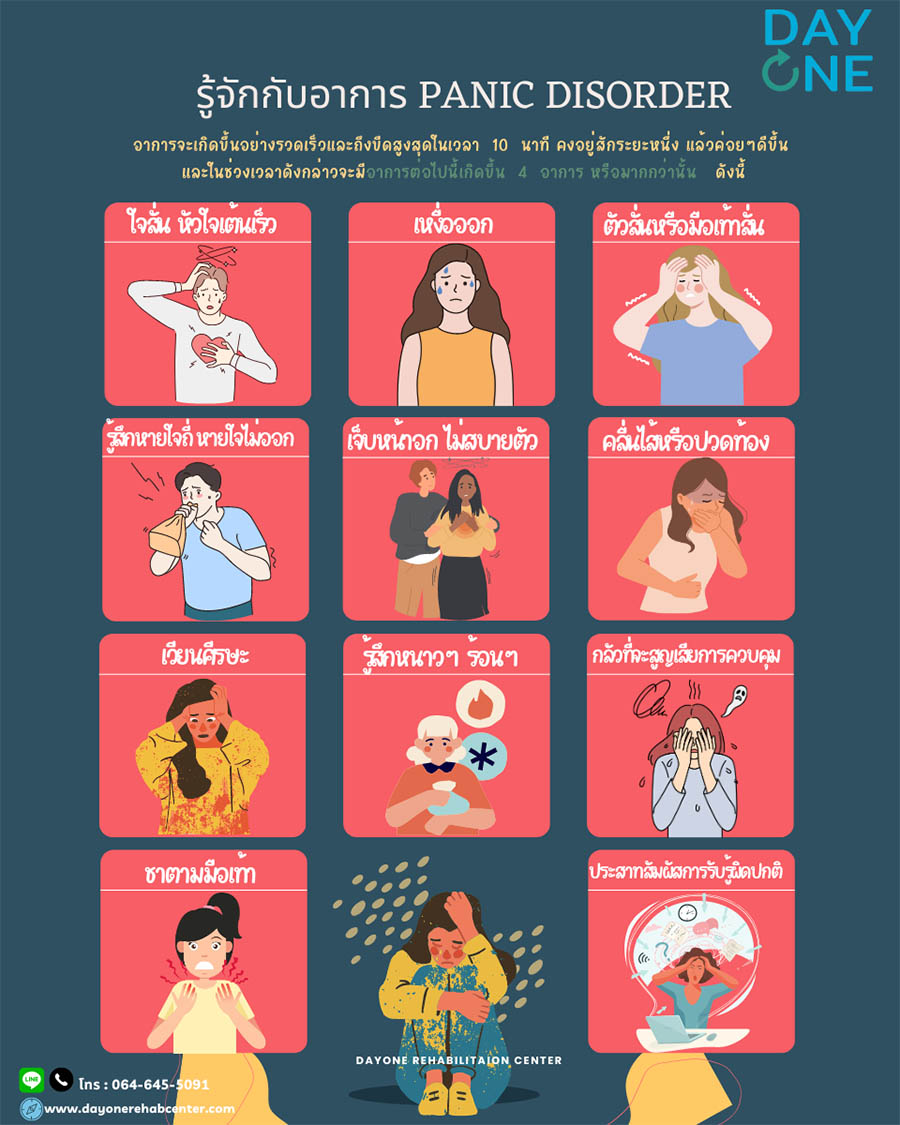
A panic attack is a sudden episode of intense fear, distress, and severe discomfort. It comes on quickly, peaking within about 10 minutes, staying at that level for a while before gradually easing. During an attack, 4 or more of the following symptoms occur:
- Heart palpitations or a racing heart
- Sweating
- Trembling or shaking hands and feet
- Shortness of breath or a feeling of being unable to breathe
- A choking sensation
- Chest pain or discomfort
- Nausea or stomach pain
- Dizziness, unsteadiness, lightheadedness, or feeling faint
- Feeling alternately cold and hot
- Numbness or tingling sensations (paresthesias)
- Altered sensory perception
- Fear of losing control
- Fear of dying
Factors or Causes Behind Panic Disorder
Panic disorder can result from a combination of genetic, biological, psychological, and environmental factors, including:
-
Genetics: Having a family member with panic disorder or another anxiety disorder can increase the risk of developing this condition.
-
Brain chemistry: An imbalance of neurotransmitters in the brain may contribute to panic symptoms. Panic disorder may also stem from the part of the brain responsible for the body’s fight-or-flight response, since the heart naturally beats faster when facing a dangerous situation.
-
Major life stressors: Events such as the death of a loved one, a traumatic experience, or a major life change can lead to the onset of panic disorder.
-
Pre-existing anxiety: Having another anxiety disorder or phobia can increase the risk of developing panic symptoms.
-
Substance use: Using depressant substances or alcohol can increase the risk of panic disorder — and withdrawal from these substances can also trigger anxiety and panic attacks.
-
Chronic illness: Certain medical conditions or chronic health problems may be associated with an increased risk of panic disorder.
-
Personality traits: Certain personality traits, such as high sensitivity or a tendency toward anxiety, may be associated with an increased risk of the disorder.
It’s important to note that while these factors can increase the likelihood of developing panic disorder or recurring panic attacks, and treatment may be needed, panic disorder is treatable — with a range of treatment approaches and medications available to help manage and reduce symptoms. If you or someone you know is experiencing panic symptoms, consult a medical professional or mental health specialist for proper assessment and treatment to manage symptoms effectively.
That said, some people try to treat themselves in ways that aren’t appropriate — turning to alcohol or drugs to reduce panic symptoms, taking excessive amounts of sleeping pills, or seeking out various medications without consulting a doctor. This is known as improper self-medication, and it carries significant health risks.
If you’re trying to cope with panic symptoms by turning to alcohol or drugs, and this behavior has escalated to the point of an addiction you can’t overcome on your own, we recommend consulting Day One Drug Treatment Center, which can guide you toward proper treatment so you can return to a normal, healthy life.
For more information, contact us at 99/1 Moo 6, Si Chula, Mueang Nakhon Nayok, Nakhon Nayok 26000, Thailand +66 64-645-5091 Mon – Sun: 9:00 AM – 5:00 PM (ICT)